
BEE CITY, along with MYVETS CHARITABLE TRUST & RESEARCH CENTRE, focuses on research, education, the grassroots conservation, monitoring and protection of biodiversity through their active involvement in projects across various states in India. We are at the forefront of developing technology to track and interpret elephant movements, providing vital information for land-use management plans aimed at reducing Elephant-Human conflicts while allowing the former’s continued access to their forest range at Tilari jungle, Dodamarg (Goa border). We recognise the need to find solutions to reconcile elephants with the communities with whom they share their land. Our Asian Elephants and Bees Project is core to our mission to come up with innovative and cost-effective methods to reduce conflict and thereby creating Environmental & Social Impact at a larger level.
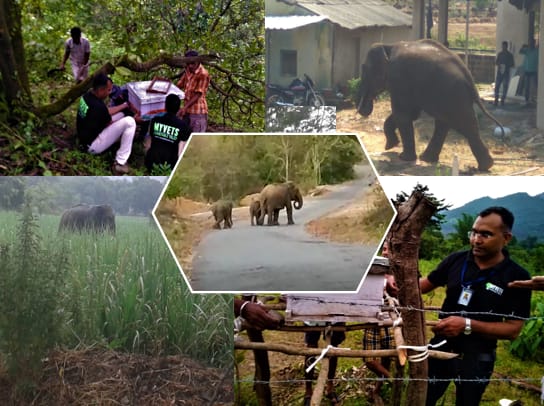
“One of the most effective strategies we use to prevent Asian Elephant crop-raiding behaviour is to enclose crops and plantations with natural “beehive fences.”
Crop-raiding by Asian elephants devastated marginalised farmers leading to food insecurity, loss of income, and even death, as well as developed a negative attitude towards elephants.
Repeated farm-level trials of using beehive fences in the Western Ghats of Tilari jungle, Dodamarg (Goa border) have benefitted Tribal Rural Farmers with fewer elephants approaching their fields. As for communities willing to manage the bees, production of “elephant-friendly” honey is an extra benefit they are reaping through this initiative.
Surrounding crop plantations and fields with beehives attached to fence posts and strung together with wires served as a humane and eco-friendly way to protect crops from Asian Elephants.
The biggest threat to forest and wildlife is climate change; and this initiative to conserve both Asian Elephants & Bees have a tremendous potential to be a game-changer in preserving ecology in the Western Ghats of Tilari jungle, Dodamarg (Goa border).